
AT&T Data Breach Settlement: What to Know Before Deadline
If you’ve ever been an AT&T customer — or even used a phone plan that ran on AT&T’s network — you might be sitting on a chunk of money right now and not even know it. AT&T just agreed to a $177 million settlement after two pretty massive data breaches in 2024, and millions of people are eligible to file a claim. Yes, real money. Yes, you could actually get paid.
Let’s break down everything you need to know — no legal jargon, no fluff, just the stuff that actually matters.
Table of Contents
AT&T Data Breach Settlement — At a Glance
Here’s the quick version if you’re in a hurry:
- What it is: A $177 million settlement covering two major 2024 data breaches
- Max payout: Up to $7,500 if you were hit by both incidents and have documented losses
- Claims deadline: December 18, 2025 — don’t sleep on this
- Opt-out deadline: October 17, 2025
- Final approval hearing: December 3, 2025
- Estimated payment date: Early 2026 (pending any appeals)
- Official website: telecomdatasettlement.com
Got it? Good. Now let’s get into the details.
So What Actually Happened? The Full Story Behind the AT&T Data Breach Settlement
AT&T got hit twice in 2024, and both incidents were pretty bad.
The first one went public in March 2024. It turned out that data from around 73 million current and former AT&T customers had been floating around on the dark web. And here’s the kicker — the data was originally from 2019. So this stuff had been out there for years before anyone caught on. We’re talking names, Social Security numbers, birth dates, home addresses, and even account passcodes. The kind of information that makes identity thieves very, very happy.
The second breach dropped in July 2024 and was honestly even bigger in scope. Hackers illegally downloaded call and text metadata from a third-party cloud platform called Snowflake. This one affected “nearly all” of AT&T’s cellular customers — covering records from May through October 2022. Now, to be clear, they didn’t grab the actual content of your calls or texts. But they did get records of who you called, when, for how long, and which cell towers were involved. That’s still a lot of sensitive stuff.
AT&T’s official position? They’re not admitting any wrongdoing. They’re settling to avoid the hassle and cost of a drawn-out legal battle. Classic big-company move — but hey, that means money goes to you instead of lawyers, so we’ll take it.
Do You Actually Qualify? Here’s the Eligibility Breakdown
This is where a lot of people get confused, so let’s keep it simple.
AT&T 1 Class — The March 2024 Breach
You’re likely eligible if you were a current or former AT&T customer whose personal data — think SSNs, birth dates, passcodes — was part of that dark web leak. This mostly covers people who had AT&T accounts around 2019 or earlier.
AT&T 2 Class — The July 2024 Snowflake Breach
You’re probably covered here if your call and text metadata was swept up in the Snowflake incident. Given how many people AT&T described as affected, this net is cast really wide.
A Few Groups That Often Get Overlooked
- MVNO customers: If you’ve ever used Cricket Wireless, Boost Mobile, H2O Wireless, or Straight Talk, you might still qualify — because those carriers ran on AT&T’s network.
- Former customers: Even if you ditched AT&T years ago, your old records might still have been sitting on their servers. That counts.
Not sure if you qualify? Head over to telecomdatasettlement.com and check using your name, email, or account number. You don’t even need a Class Member ID to look yourself up.
How Much Money Can You Actually Get?
Okay, this is the part everyone really wants to know. Let’s be real about it.
If You Have Documented Losses — This Is Where It Gets Interesting
If you can show that these breaches actually cost you money, you can file for a documented loss claim:
- AT&T 1 (March 2024 breach): Up to $5,000 for things like identity theft costs, fraudulent charges, or credit monitoring fees — as long as those losses happened in 2019 or later
- AT&T 2 (July 2024 breach): Up to $2,500 for losses tied to the metadata breach, starting from April 14, 2024
- Both breaches combined: Up to $7,500 total if you were hit by both and have receipts to prove it
Acceptable proof includes bank statements showing unauthorized charges, receipts for identity protection services, or records of wages you lost while dealing with the fallout.
If You Don’t Have Proof — You Can Still Get Something
No receipts? No problem. You can still file for a tiered pro rata share of the remaining settlement funds:
- Tier 1 is for people whose Social Security numbers were directly exposed. These folks get the biggest slice — roughly five times more than the base amount.
- Tier 2 and Tier 3 cover everyone else, with smaller base amounts.
Here’s the honest truth though — because tens of millions of people are eligible, the pro rata shares are expected to be pretty small. We’re potentially talking a few dollars. So if you’ve got any documentation of real losses, absolutely go the documented claim route instead. It’s worth the extra effort.
How to File Your AT&T Data Breach Settlement Claim — Step by Step

This part is actually way easier than it sounds. Here’s exactly what to do:
Step 1 — Find Your Notice
Check your email for a message from attsettlement@e.emailksa.com, or look for a physical letter from Kroll Settlement Administration. Either should contain your Class Member ID, which makes the process smoother.
Step 2 — No Notice? No Problem
If you never got anything, don’t panic. Just go to telecomdatasettlement.com and check your eligibility manually using your name, email address, or old account number.
Step 3 — Pick Your Claim Type
Decide whether you’re filing a Documented Loss claim (you’ll need proof) or a simple Tiered claim (no documentation required, just a smaller payout).
Step 4 — Gather Your Documents
If you’re going for the bigger payout, pull together anything that shows real financial harm — fraudulent charge statements, credit monitoring receipts, identity theft resolution records, or wage loss documentation.
Step 5 — Submit Before the Deadline
Online claims need to be completed by December 18, 2025. Paper claims need to be postmarked by the same date. That’s it. Don’t wait until the last minute though — websites get overloaded as deadlines approach.
Quick Scam Warning
The official administrator — Kroll Settlement Administration — will never call you asking for your bank account details or charge you a fee to process your claim. If anyone does that, hang up. It’s a scam.
Key Dates You Absolutely Cannot Miss
Mark these in your calendar right now:
- October 17, 2025: Deadline to opt out or file an objection. If you think you have a stronger individual case and want to sue AT&T separately, this is your last chance to preserve that right.
- December 3, 2025: The court holds its final approval hearing to review the settlement.
- December 18, 2025: The hard deadline for all claims — both online and postmarked paper submissions.
- Early 2026: When payments are expected to start going out, assuming no appeals slow things down.
Protect Yourself Right Now — Don’t Just Wait for a Check
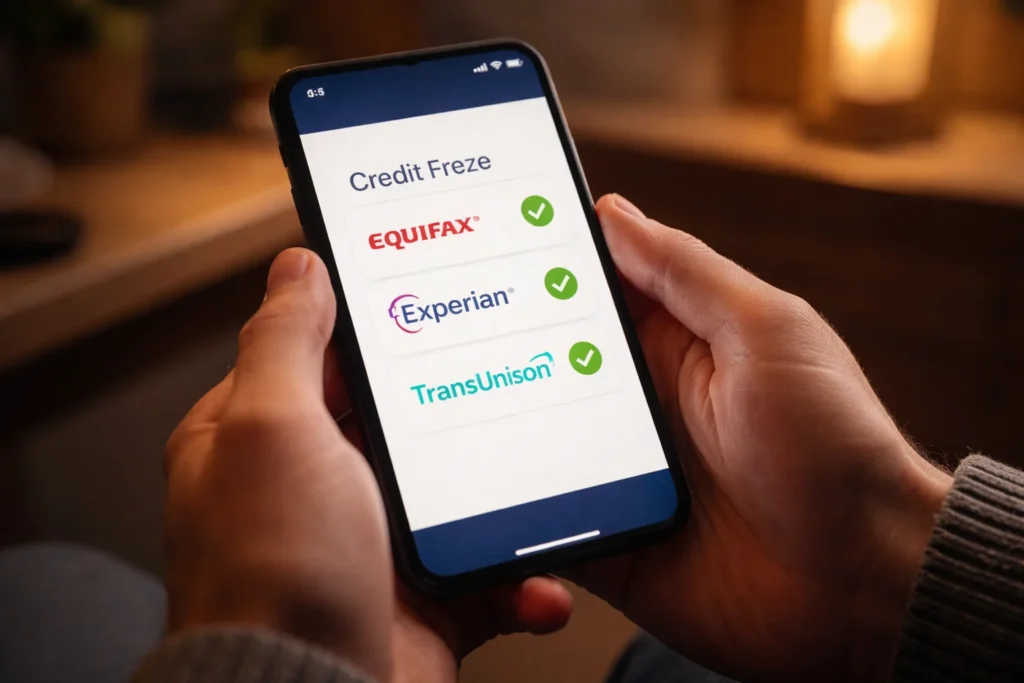
Filing your AT&T data breach settlement claim is great, but it honestly shouldn’t be the only thing you do. Your data is already out there, and a settlement payout doesn’t undo that. Here’s what cybersecurity folks recommend doing immediately:
Freeze Your Credit
This is the big one. A credit freeze stops anyone from opening new credit accounts in your name — even if they have your Social Security number. It’s free, it takes about ten minutes across the three major bureaus (Equifax, Experian, and TransUnion), and it’s one of the most effective things you can do right now.
Reset Your AT&T Passcode
Since account passcodes were directly exposed in the March 2024 breach, change yours if you haven’t already. And please — no birth years, no repeated numbers. Make it something actually hard to guess.
Turn On Multi-Factor Authentication
MFA adds a second layer of verification whenever you log into an account. Even if someone gets your password, they still can’t get in without that second step. Set it up everywhere — AT&T account, email, banking apps, all of it.
Keep an Eye on Your Accounts
Set up transaction alerts on your bank and credit cards. You can also pull your free credit reports at AnnualCreditReport.com to check for unfamiliar accounts or inquiries. If something looks off, report it fast.
Watch Out for Phishing
Scammers love to use stolen data to craft convincing fake emails and calls. They might even mention your real account details to seem legit. If something feels off — verify it independently before clicking anything or giving out any information. Here’s a solid resource from the Federal Trade Commission on credit freezes and fraud alerts to help you stay ahead of it.
The Bigger Picture — Why This Settlement Actually Matters
The AT&T data breach settlement isn’t just about getting a few bucks back. It’s a sign of where things are heading in the tech and telecom world.
The Snowflake platform that got breached wasn’t just used by AT&T — it was tied to multiple major companies that all got hit around the same time. That tells you something important: your data doesn’t just live with the company you signed up with. It travels through vendors, cloud platforms, and third-party tools you’ve probably never heard of. And when one of those links in the chain goes down, the damage ripples out fast.
For anyone in the IT and cybersecurity space, this is a textbook case of why third-party risk management matters so much. You can have the most secure internal systems in the world, but if your vendors aren’t locked down, you’re still exposed.
For everyday customers, it’s a reminder that data breaches have very real, very personal consequences — and that it pays (literally, in this case) to stay informed.
Bottom Line — Go File Your Claim
If you were an AT&T customer, a former AT&T customer, or used any carrier running on AT&T’s network, take five minutes and check if you qualify. A basic tiered claim takes almost no time to file. A documented loss claim takes a bit more effort but could mean real money back in your pocket.
The AT&T cybersecurity breach settlement deadline is December 18, 2025. It’s not moving again. So don’t put it off, bookmark telecomdatasettlement.com, and get it done.
And while you’re at it — freeze that credit, reset those passcodes, and turn on MFA. The check helps, but protecting yourself going forward is the real win here.