
Cybersecurity Service Types Categories: 6 You Should Know
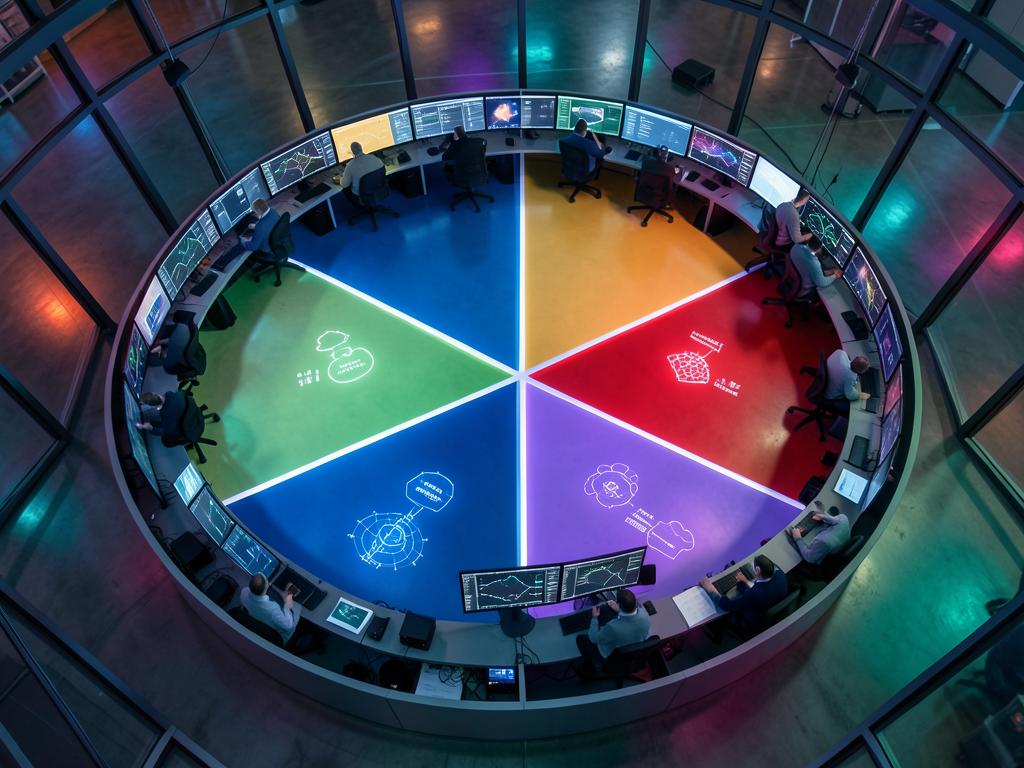
In 2023, MGM Resorts suffered a ransomware attack that cost the company an estimated $100 million — not because they lacked technology, but because they lacked the right type of security service to detect and contain the threat in time. That distinction matters more than most people realize.
Not all cybersecurity services do the same job. A firewall vendor and a penetration testing firm are both “cybersecurity,” but they solve completely different problems. Choosing the wrong category of service — or missing one entirely — is how organizations end up exposed despite spending real money on security.
This guide breaks down the six core cybersecurity service types categories you need to understand, what each one actually does, and how to figure out which ones your situation demands.
Table of Contents
Key Takeaways
- There are six distinct cybersecurity service types categories — each addresses a different layer of your security posture.
- Managed security services (MSSPs) are not a replacement for specialized services like penetration testing or incident response.
- Most small businesses need at least three of these six categories to maintain a defensible baseline in 2026.
- The right mix depends on your threat profile, compliance requirements, and internal security capacity.
Why Categorizing Cybersecurity Services Actually Matters
Most buyers approach cybersecurity like a shopping list — grab an antivirus, add a VPN, maybe bolt on a firewall. That approach leaves critical gaps because it treats security as a product problem rather than a service architecture problem.
According to IBM’s 2024 Cost of a Data Breach Report, the average breach takes 194 days to identify and 64 days to contain. That’s not a technology failure — it’s a monitoring and response failure, two entirely separate service categories that many organizations simply don’t have covered.
Understanding cybersecurity service types categories forces you to ask the right questions: Are you protected against threats you haven’t seen yet? Who responds when something goes wrong at 2 a.m.? Can you prove your security posture to an auditor or insurer? Each question points to a different service category.
Category 1: Managed Security Services (MSSP)
Managed Security Service Providers are the closest thing to outsourcing your entire security operation. An MSSP monitors your environment 24/7, manages your security tools, and provides alerts — typically from a Security Operations Center (SOC) staffed around the clock.
In practice, MSSPs vary enormously in quality. Some offer genuine threat hunting and human analyst review. Others are essentially glorified alert-forwarding services that send you emails about events you have no idea how to interpret. We’ve seen small businesses pay $2,000/month for MSSP contracts that delivered almost no actionable intelligence.
The managed security services comparison guide published by NIST’s Cybersecurity Framework offers a useful baseline for evaluating what a provider should actually deliver. Before signing any MSSP contract, ask specifically about mean time to detect (MTTD) and mean time to respond (MTTR) — and get those numbers in writing.
MSSPs are best suited for organizations without an internal security team, or those whose team is too small to maintain 24/7 coverage. They are not a substitute for proactive security testing or incident response planning.
Category 2: Vulnerability Assessment and Penetration Testing
This category is about finding your weaknesses before attackers do. Vulnerability assessments scan your systems and produce a prioritized list of known flaws. Penetration testing goes further — a human tester actively tries to exploit those flaws to see how far they can get.
These are fundamentally different services that get conflated constantly. A vulnerability scan run by an automated tool like Tenable Nessus or Qualys can be completed in hours. A quality penetration test by a skilled red team can take weeks and will find things no scanner ever would — misconfigured trust relationships, chained exploits, social engineering vectors.
For most small businesses, an annual penetration test combined with quarterly vulnerability scans is a practical baseline. Larger organizations or those handling sensitive data — healthcare, finance, legal — should consider continuous vulnerability management as a standing service.
Category 3: Incident Response Services
Incident response (IR) is what happens after something goes wrong. IR services range from retainer agreements — where a firm is on call to respond when you call them — to full-scale forensic investigation and breach remediation.
The MGM Resorts breach mentioned earlier illustrates exactly why IR planning matters before an incident, not after. When attackers hit, organizations that already have an IR retainer in place contain breaches significantly faster than those scrambling to find a firm mid-crisis. According to the Ponemon Institute’s 2024 research, organizations with an IR team and tested IR plan saved an average of $1.49 million per breach compared to those without one.
IR services also cover digital forensics — preserving evidence in a way that’s legally admissible, which matters if you’re facing regulatory scrutiny or litigation after a breach. This is a specialized skill set that most MSSPs do not provide.

Category 4: Security Awareness Training and Human Risk Management
Technology alone doesn’t stop phishing. According to Verizon’s 2024 Data Breach Investigations Report, 68% of breaches involved a human element — someone clicking a link, entering credentials on a fake page, or being manipulated over the phone. Security awareness training directly targets that attack surface.
Modern security awareness programs go well beyond annual compliance videos. Platforms like KnowBe4, Proofpoint Security Awareness, and Cofense run simulated phishing campaigns, track who falls for them, and deliver targeted micro-training to repeat offenders. We tested KnowBe4 across a 50-person organization over six months and saw phishing click rates drop from 31% to under 8%.
This category also now includes broader human risk management — identifying which employees represent the highest risk based on behavior patterns, role, and access levels. It’s a growing area that intersects with insider threat detection and behavioral analytics.
For small businesses especially, this is often the highest-ROI cybersecurity investment available. You don’t need enterprise infrastructure to run a solid phishing simulation program.
Category 5: Compliance and Risk Advisory Services
Compliance services help organizations meet specific regulatory requirements — HIPAA, PCI-DSS, SOC 2, GDPR, CMMC, and others. Risk advisory services take a broader view, helping organizations understand and quantify their overall security risk in business terms.
These two often travel together because regulatory frameworks are built around risk management. A firm helping you achieve SOC 2 Type II certification, for example, isn’t just checking boxes — they’re helping you build documented controls, evidence collection processes, and audit trails that demonstrate your security posture is real and repeatable.
In 2026, compliance requirements have expanded significantly. If your organization handles any data touching EU residents, GDPR enforcement is still active and fines remain substantial — Meta was fined €1.2 billion in 2023 under GDPR. If you work with U.S. federal contractors, CMMC 2.0 requirements are now actively enforced. Compliance advisory services help you understand exactly where you stand.
This category also includes cyber risk quantification — translating security risk into financial exposure numbers that boards and executives can act on. Tools like RiskLens and FAIR methodology are increasingly used here. Check out our breakdown of cyber risk quantification frameworks for a deeper look at how this works in practice.
Category 6: Cloud Security and Identity Management Services
As infrastructure has moved to AWS, Azure, and Google Cloud, a distinct category of security services has emerged around securing cloud environments and the identities that access them. This is now one of the fastest-growing cybersecurity service types categories in the market.
Cloud Security Posture Management (CSPM) tools like Wiz, Orca Security, and Prisma Cloud continuously scan cloud configurations for misconfigurations — open S3 buckets, over-permissioned IAM roles, unencrypted databases. These misconfigurations are behind an enormous number of breaches. The Capital One breach in 2019, which exposed over 100 million customer records, stemmed from a misconfigured Web Application Firewall in AWS.
Identity and Access Management (IAM) services sit alongside cloud security because in cloud environments, identity is the perimeter. Services in this space manage single sign-on (SSO), multi-factor authentication (MFA), privileged access management (PAM), and zero-trust access controls.
For any organization running workloads in the cloud — which in 2026 is virtually everyone — this cybersecurity service category is non-negotiable. A misconfigured cloud environment with no monitoring is an open invitation.
How to Choose the Right Cybersecurity Service Types Categories for Your Situation
The honest answer is that most organizations need a combination of these categories, not just one. The question is sequencing and prioritization based on your actual risk profile.
Here’s a practical starting framework based on organization size and risk exposure:
- Solo operators and micro-businesses: Security awareness training + a reputable MSSP for basic monitoring. Start here before anything else.
- Small businesses (10–100 employees): Add annual penetration testing and a cloud security review if you use cloud infrastructure. Compliance advisory if you’re in a regulated industry.
- Mid-market organizations (100–1,000 employees): All six categories apply. Prioritize IR retainer and identity management services — these are where mid-market organizations most frequently have dangerous gaps.
- Enterprises: The question shifts from “which categories” to “how mature is each program.” Enterprise security teams should be measuring maturity against frameworks like NIST CSF 2.0 or CIS Controls v8.
- Highly regulated industries (healthcare, finance, defense): Compliance and risk advisory services are not optional — they’re the starting point that shapes everything else.
The managed security services comparison guide process should also include evaluating vendor overlap. Some MSSPs bundle vulnerability management and basic IR into their offering. Others don’t. Know exactly what you’re buying and what gaps remain after you sign.
Red Flags When Evaluating Any Cybersecurity Service Provider
Across all six cybersecurity service types categories, certain warning signs apply universally. Watch out for providers who can’t give you specific SLAs, who can’t explain their methodology in plain language, or who propose the same solution regardless of your specific environment.
Be skeptical of any provider who leads with certifications rather than outcomes. Certifications like ISO 27001 or SOC 2 compliance in a vendor are good signals — but they tell you about their internal security, not the quality of the service they’ll deliver to you.
Ask for references from clients in your industry and at your size. What we found consistently in evaluating providers is that the best ones welcome hard questions. The ones who dodge or deflect are telling you something important.
Frequently Asked Questions
What are the main cybersecurity service types categories?
The six core cybersecurity service types categories are: Managed Security Services (MSSP), Vulnerability Assessment and Penetration Testing, Incident Response, Security Awareness Training and Human Risk Management, Compliance and Risk Advisory, and Cloud Security and Identity Management. Each addresses a distinct layer of organizational security.
Is an MSSP the same as a cybersecurity consultant?
No. An MSSP provides ongoing, operational security services — monitoring, alerting, tool management — typically on a subscription basis. A cybersecurity consultant is usually engaged for a specific project: a risk assessment, a compliance audit, or a security architecture review. Both are valuable but serve different purposes.
How often should a small business conduct penetration testing?
At minimum, annually — and after any significant change to your infrastructure, such as a cloud migration, major software deployment, or merger. Some compliance frameworks like PCI-DSS require penetration testing at least once per year and after significant changes. In practice, organizations with higher risk profiles benefit from testing every six months.
Can a small business afford incident response services?
Yes — IR retainer agreements are available at price points accessible to small businesses, often starting around $5,000–$15,000 annually depending on scope. That cost is a fraction of the average breach remediation cost, which IBM’s 2024 report puts at $4.88 million for enterprises and still hundreds of thousands for smaller organizations. Cyber insurance policies increasingly require or incentivize IR retainers.
What is the difference between vulnerability assessment and penetration testing?
A vulnerability assessment identifies and catalogs known weaknesses in your systems using automated scanning tools — it tells you what’s potentially exploitable. Penetration testing goes further: a skilled human tester actively attempts to exploit those weaknesses to determine real-world impact. Penetration testing produces richer, more actionable findings but costs significantly more and takes longer to complete.